· Axite
Anyone can EEG - How fast does your brain work?
A 400 millisecond journey trough the brain, from sound to meaning
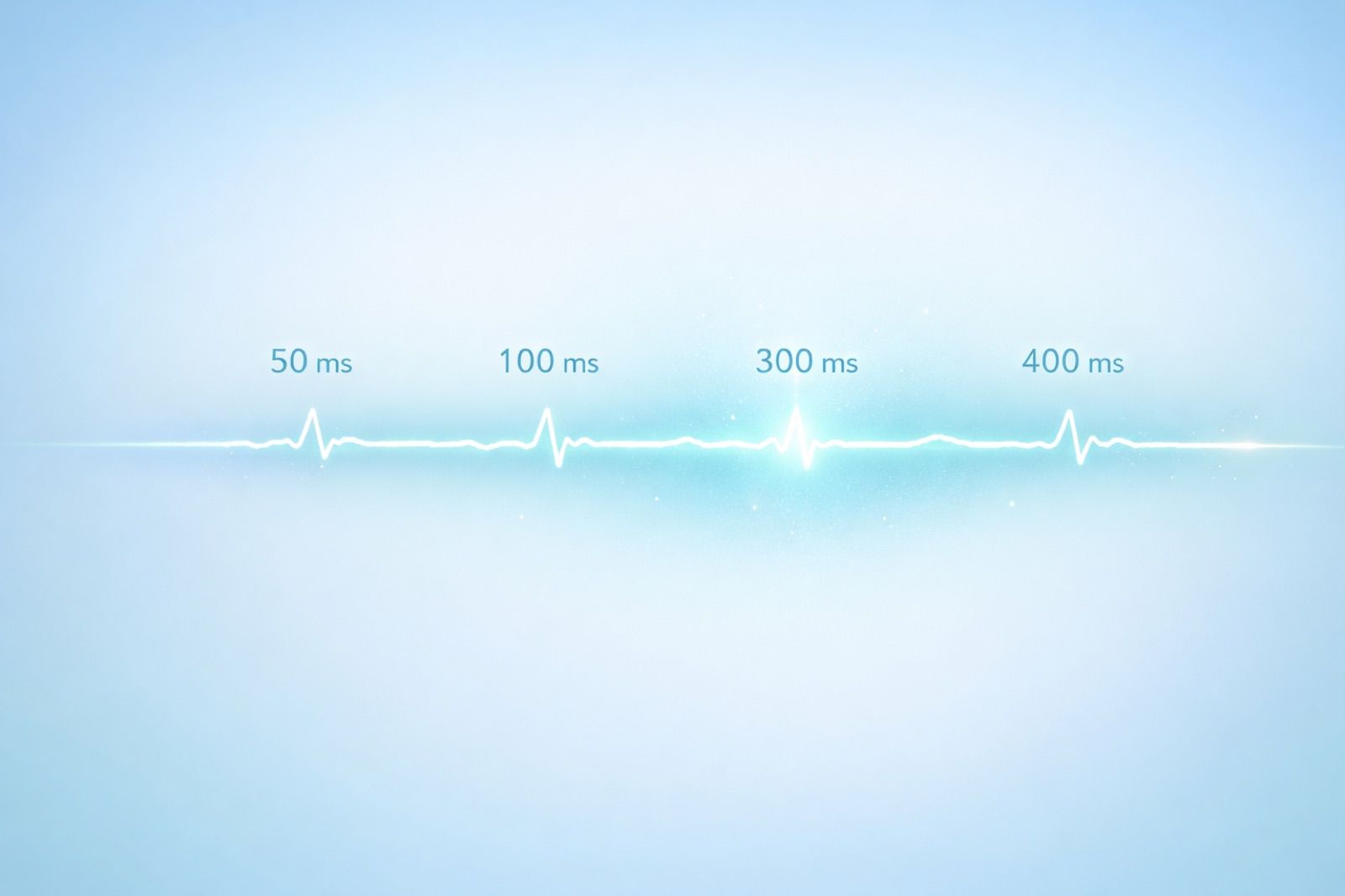
Let me get straight to the point: your brain is in complete control. And it takes control even faster than you think. Is there anything your body can achieve in less than half a second? Probably not. However, your brain can do all sorts of things in such a short time.
We know this thanks to EEG, the technique that measures the brain’s electrical activity from the scalp. EEG shows us a continuous stream of neural signals. But when researchers want to know exactly when the brain detects a sound, notices something unexpected, or extracts meaning, they use a specific approach within EEG called ERP research.
*Event related potentials *are small changes in brain activity that happen in response to a specific event, like hearing a word or a tone. If you repeat that same sound many times and line up the brain recordings at the exact moment it occurs, you can average them together. The random background activity cancels out, and what remains is the brain’s reliable response, measured with millisecond precision.
This still might sound a bit vague. Allow me to take you on a journey through the brain to discover how the brain only needs 400 milliseconds to turn sound into meaning.
A journey through 400 milliseconds
50 milliseconds
Imagine you hear a sound, like when someone calls your name, or a beep from the washing machine. About 50 milliseconds after that sound, a small positive wave appears. You are not yet aware of anything just yet, but your brain is already filtering the sound. The P50 appears.
And before you know it, your brain has decided what deserves your attention and what can fade into the background.
100–200 milliseconds
Around 100 milliseconds in, the N100 peaksand is quickly followed by the P200.This is the moment your brain snaps to attention. Something just happened. A sound began! And the interesting thing: your brain isn’t passively recording this sound, but is actually already turning up the volume if it needs your attention.
Attention sharpens the signal. Relevance amplifies it.
Without you being conscious of it, your brain is actively boosting the sounds that deserve a closer look.
150–250 milliseconds
Play a series of identical tones. Beep. Beep. Beep. Beep.
Now slip in one that is just slightly different.
Even if you are not paying attention, even if your mind is somewhere else entirely, your brain notices. A distinct negative wave appears in the EEG: the Mismatch Negativity. No effort required.
Why? Because your brain was already predicting the pattern. It had quietly decided what should come next. And the moment reality breaks that expectation, it reacts automatically.
Your brain is not passively recording
It is constantly running forecasts.
300 milliseconds
This next signal, called the P3b, appears about 300 milliseconds after a meaningful stimulus.
Here, attention becomes intentional.
Not just noticing something new, but choosing to focus on it.
The brain recognizes that this stimulus is relevant. It allocates resources. It prepares a response.
This is the moment of engagement.
The instant your brain decides: this matters.
And before you realize it, your brain has already set your response in motion.
400 milliseconds
And then the brain recognizes the language. This wave, the N400, is a distinct negative peak that shows up when a word does not match the meaning your brain was expecting.
Imagine someone says,
“I take my coffee with cream and… shoes”
For a brief moment, everything sounds normal. Then something feels off.
This is your brain performing a rapid sense check. It has already predicted how the sentence should end, and when reality violates that expectation, it responds instantly! In less than half a second, sound becomes language, language becomes meaning, and your brain has already registered the mismatch before you consciously think, “what”?
ERP Visual
In this journey, an incredible amount happens. It’s even more incredible when you think about how short 400 milliseconds really is.
In 400 milliseconds, you can’t send a text.
You can’t take a full breath.
You can’t even blink.
It’s less than half a second.
And yet, in that tiny slice of time, your brain detects a sound, compares it to memory, evaluates its importance, checks it against expectation, and extracts meaning.
So what does this fast journey actually tell us? This is exactly what ERP research makes visible. Event related potentials allow scientists to measure with millisecond precision how and when the brain processes sound, from the earliest flicker of detection in the P50 to the detailed reflection in the N400.
What Hans Berger first showed us is that the brain is electrical. What ERP research reveals is that this electricity is not random noise. It has structure. Timing. Phases. An internal logic.
So the next time someone calls your name, your phone buzzes, or you hear an unexpected word in a sentence, remember this: your brain has already sprinted through an extraordinary obstacle course before you even realize what happened.
Curious about what these ERPs are actually good for and why researchers are so excited about them? Stay tuned. In the upcomming weeks, we will explore how these tiny brain signals are used to answer big questions about the human mind.
Follow our journey on Linkedin
Originally published on Substack.