· Axite
Can Your Smartphone Really Track Your Cognitive Fitness?
Tracking your cognitive fitness without difficult tests
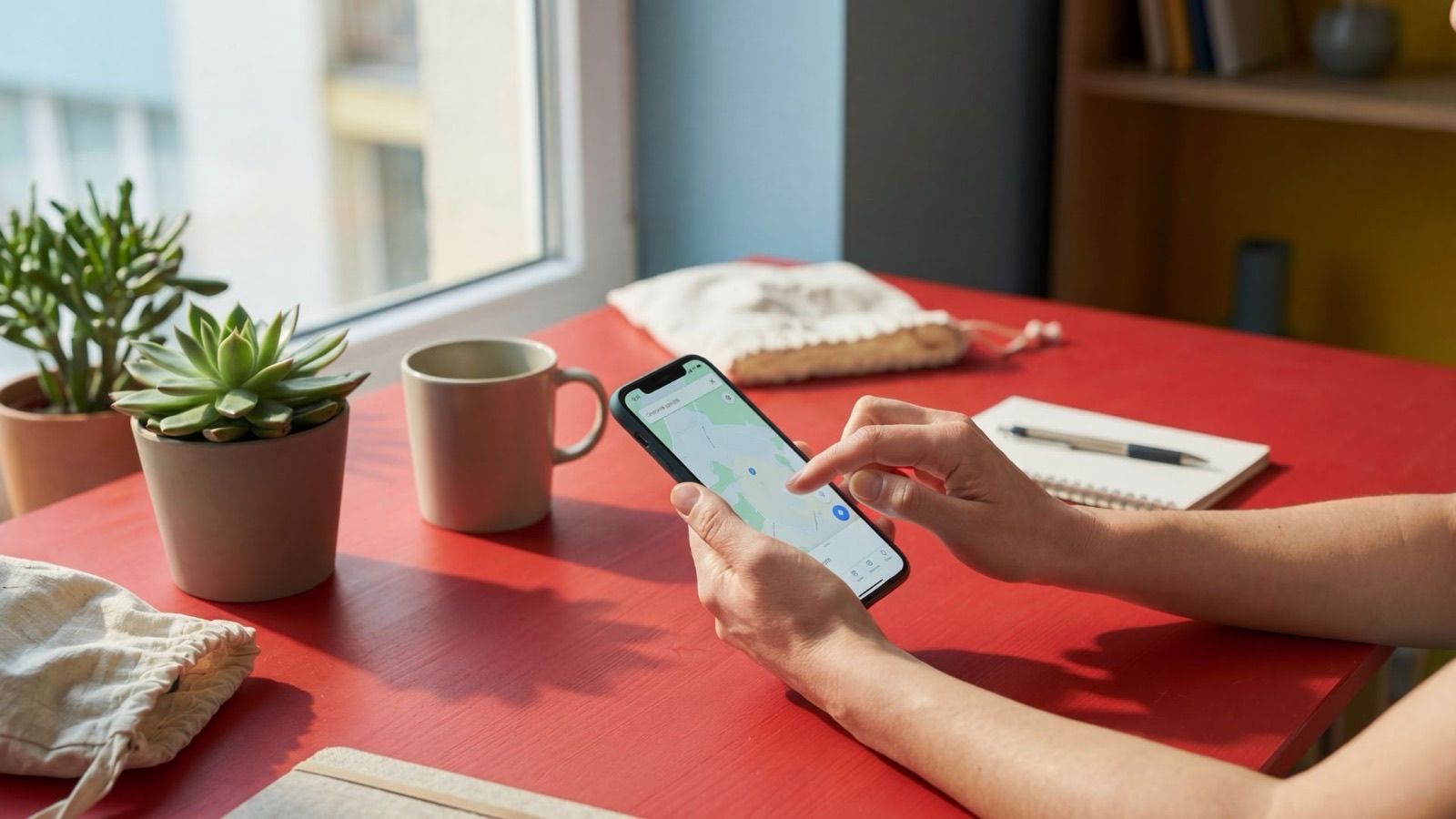
Your smartphone can do a whole lot. And probably also a whole lot more than you’d think. But can your smartphone give you insights into how your brain is performing? The short answer is yes. The intervals between your taps contain biomarkers that tell you something real about your cognitive fitness.1 No need for special tests, just you using your phone as you normally would. Using this method is effortless, but the science behind it can become quite complex. Luckily we are here to explain it clearly! Read on to find out how the timing between your taps can tell you something real about your cognitive performance.
The problem with self-reported brain health
Sounds like it’s pretty easy to measure your cognitive fitness, but experience proves the opposite. Normally, measuring brain health is high maintenance and requires a lot of expertise and a clinical setting. Luckily, with measuring cognitive functions, we have enough tests and surveys that can give us the answers! Right? Sadly, questionnaires are subjective and can easily be manipulated. Even without the test subject being fully aware of it. Someone having a good day might rate their concentration as fine, while their cognitive state tells a completely different story. What if the solution to this is already in your pocket?
How the way you tap your phone reveals your cognitive fitness
The solution is called Tappigraphy. This method was developed at Leiden University in the Netherlands.2 They discovered that the way you use your phone can already tell you lots of interesting things about your cognitive performance. For example, how fast, often, and long you tap your phone. It’s not about what you do on your phone, but how. All of this gives a reliable view of your cognitive abilities and sleep.
How does cognitive monitoring through your smartphone work? Your brain is running the show, even when you are just typing. When your mind is alert and well-rested, your fingers move with a natural, steady rhythm. When fatigue or cognitive load creeps in, that rhythm slows down and starts to scatter. The pauses get longer. The pace becomes uneven. These are not random glitches. They are behavioral biomarkers, and they are, in fact, easily measurable.
Does that mean Tappigraphy can diagnose you? No, but it can do something equally powerful: it gives you a reliable proxy for your cognitive state over time, instead of just one single moment.
Who benefits from smartphone-based cognitive monitoring?
Tappigraphy is most useful for people who need to track their cognitive performance over time without adding anything to their day. People living with epilepsy who want to understand how their medication affects their cognition. People recovering from a stroke, concussion, or long COVID, where the question “am I actually getting better?” deserves a real answer, not just a feeling. The measurement becomes even more reliable when you combine Tappigraphy with remote EEG hardware.3 For those looking for the highest level of precision, this combination is always recommended.
But simply using Tappigraphy is directly relevant for anyone who takes their mental energy seriously. If you want to know whether you are sharper after a good sleep or slower after a stressful week, or want to test a specific intervention, Tappigraphy picks up changes overtime, quietly in the background. Your phone does the work. You just live your life.
Brain monitoring for everyone
In short, Tappigraphy changes the whole game of cognitive monitoring. It adds a new layer to understanding your cognitive health. It doesn’t require a clinic, a specialist, or an expensive test. Just your phone, doing what you’re always doing. On the couch, scrolling, typing, gaming.
That accessibility is exactly what drives us at Axite. We believe that objective cognitive health insights should be available to everyone, not just those who have access to expensive hospital visits or lengthy clinical tests.
Right now you are probably wondering: how can I use this? Luckily we have the answer. Next to writing about everything neurotech, we also love developing software for remote brain monitoring. And helping in making the invisible visible.
We are currently building something we are really excited about. A way to bring Tappigraphy-inspired cognitive monitoring straight to your phone, no clinical setting required. We can’t wait to share it with you. And we think you’ll feel the same way once you try it!
Want to measure your own cognitive fitness using only your phone? You’re in luck! By following our journey on Substack, you’re automatically updated on anything related to our remote brain monitoring products. In the meantime, you can read about the latest news in neurotech, brain facts, and everything you need to know about remote brain monitoring. And the best part? We are here for everyone, not just the experts, but anyone who finds the brain genuinely fascinating. No neuroscience degree required!
1
Ceolini, E., & Ghosh, A. (2023). Common multi-day rhythms in smartphone behavior. npj Digital Medicine, 6. https://doi.org/10.1038/s41746-023-00810-x2
Ghosh, A. et al. Cognitive Psychology Unit, Institute of Psychology, Leiden University. See also: CODELAB – Cognition in the Digital Environment Laboratory. https://www.universiteitleiden.nl/en/research/research-projects/social-and-behavioural-sciences/psychology/codelab3
QuantActions AG. Smartphone interaction biomarkers combined with cognitive tests for remote monitoring. https://www.quantactions.com/science
Originally published on Substack.